
Begginner Guides
how to store mushroom spores
Jun
How to Store Mushroom Spores: A Complete Guide to Preserving Viability for the Long Term
Mushroom spores are remarkably resilient reproductive cells that allow fungi to spread and reproduce across diverse environments. Whether you are interested in microscopy, taxonomy, education, or building a reference collection, proper storage is one of the most important factors in maintaining spore quality over time. Poor storage conditions can expose spores to excessive heat, moisture, light, and contamination, all of which may reduce their longevity and usefulness.
This guide explains the science behind mushroom spore storage, the environmental factors that matter most, recommended storage methods, common mistakes to avoid, and practical tips for keeping spore samples organized and well preserved.
Understanding Mushroom Spores
Spores are microscopic reproductive structures produced by mushrooms. Unlike seeds, spores contain very limited stored nutrients and depend heavily on suitable environmental conditions to remain viable over extended periods.
Many mushroom enthusiasts collect spores for:
- Microscopic observation
- Species identification
- Taxonomic reference collections
- Educational purposes
- Scientific documentation
Regardless of the intended use, careful storage practices help preserve the physical integrity of the spores and reduce degradation over time.
Why Proper Storage Matters
Freshly collected spores can gradually lose viability when exposed to unfavorable conditions. Although different mushroom species have varying levels of durability, four environmental factors consistently have the greatest influence on preservation:
- Temperature
- Moisture
- Oxygen exposure
- Light exposure
Managing these variables can significantly extend the useful lifespan of a spore sample.
Temperature: One of the Most Important Factors
Temperature has a major influence on the rate at which biological materials age.
Room Temperature Storage
Short-term storage at room temperature may be acceptable for properly dried spore prints if environmental conditions remain stable. However, prolonged exposure to fluctuating temperatures generally accelerates deterioration.
Avoid storing spores near:
- Windows
- Radiators
- Heating vents
- Kitchens
- Vehicles
- Attics
These locations often experience significant temperature swings.
Refrigerated Storage
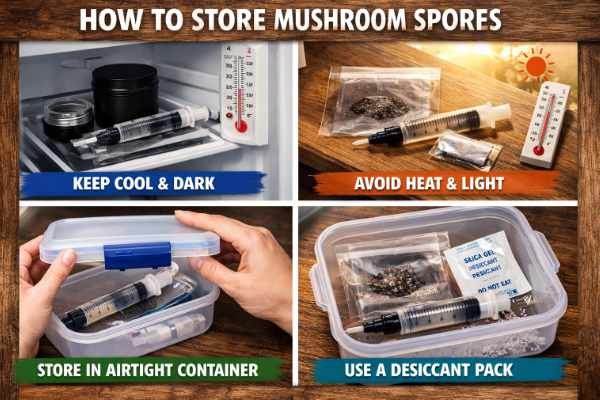
For longer-term preservation, refrigeration is commonly preferred because cooler temperatures slow many natural degradation processes.
A refrigerator provides a relatively stable environment when compared with most indoor locations.
When using refrigeration:
- Keep samples sealed.
- Prevent condensation.
- Minimize unnecessary handling.
- Store away from areas with frequent moisture buildup.
Freezing Considerations
Some biological materials tolerate freezing well, while others may be damaged depending on moisture content and storage preparation. Improper freezing can introduce ice crystal formation or repeated freeze-thaw cycles that may negatively affect samples.
If samples are frozen, avoiding repeated temperature changes is generally more important than the freezing itself.
Moisture Control
Moisture is one of the greatest threats to stored mushroom spores.
Excess humidity may encourage:
- Mold growth
- Bacterial contamination
- Premature germination under certain conditions
- Clumping
- Sample degradation
Keeping spores dry is therefore essential.
Dry Before Storage
Fresh spore prints should be completely dry before they are sealed into storage containers.
Trapped moisture is one of the most common reasons collections deteriorate over time.
Desiccants
Many collectors place a small desiccant packet nearby (without direct contact with the spores themselves) to help control humidity within a storage container.
Common desiccants include silica gel products designed for archival storage.
If using reusable desiccants, regenerate or replace them periodically according to the manufacturer’s instructions.
Choosing the Right Storage Container
The container you choose helps protect spores from moisture, contamination, and physical damage.
Paper Envelopes
Paper envelopes are often used for dried spore prints because they allow limited airflow during the initial drying period.
Once completely dry, the envelope can be placed inside a sealed secondary container for additional protection.
Advantages include:
- Inexpensive
- Easy labeling
- Lightweight
- Minimal static
Glass Containers
Glass containers provide excellent protection against moisture and odors.
Benefits include:
- Chemically stable
- Durable
- Airtight when properly sealed
- Suitable for long-term storage
Amber-colored glass also helps reduce light exposure.
Plastic Containers
High-quality laboratory-grade plastic containers may also be suitable.
Choose containers that:
- Seal tightly
- Resist cracking
- Are clean and dry
- Do not easily absorb odors
Very thin disposable plastics may not provide adequate long-term protection.
Protecting Against Light
Ultraviolet light can gradually damage biological materials.
For best results:
- Store samples in darkness.
- Use opaque containers when possible.
- Keep containers inside drawers or storage boxes.
- Avoid prolonged exposure to direct sunlight.
Dark storage conditions contribute to longer preservation.
Labeling Your Collection
Proper labeling saves considerable time and prevents confusion later.
Each sample should ideally include:
- Species name (if known)
- Collection date
- Collection location
- Collector’s name or initials
- Collection number
- Notes about the specimen
Clear labeling becomes increasingly valuable as a collection grows.
Organizing Multiple Samples
Organization is just as important as preservation.
Many collectors use simple cataloging systems.
Possible methods include:
Alphabetical Organization
Arrange specimens by scientific name.
Date Organization
Store according to collection date.
Geographic Organization
Group samples by region or habitat.
Numbering Systems
Assign each collection a unique identification number linked to a notebook or spreadsheet.
Digital records provide an additional layer of organization and backup.
Preventing Contamination
Contamination can reduce the quality of stored spores and make future examination more difficult.
Good practices include:
- Using clean collection materials
- Avoiding unnecessary handling
- Keeping containers sealed
- Working on clean surfaces
- Preventing cross-contact between different samples
Even small amounts of dust or debris can complicate later observations.
Handling Samples Carefully
Every time a container is opened, environmental conditions change.
Repeated handling may introduce:
- Moisture
- Dust
- Finger oils
- Airborne particles
Handle samples only when necessary and reseal them promptly afterward.
Monitoring Stored Samples
Long-term storage benefits from occasional inspection.
Check periodically for:
- Mold
- Condensation
- Damaged containers
- Faded labels
- Pest activity
- Physical deterioration
Addressing small issues early can help protect the remainder of a collection.
Common Mistakes to Avoid
Storing Damp Samples
Moisture is one of the fastest ways to ruin stored spores.
Always ensure samples are dry before sealing them.
Poor Labeling
An unidentified sample may lose much of its scientific or educational value.
Label immediately after collection.
Frequent Temperature Changes
Repeated warming and cooling can introduce condensation.
Choose a stable storage location.
Exposure to Sunlight
Direct sunlight raises temperatures and increases UV exposure.
Store samples in darkness whenever possible.
Weak Packaging
Thin envelopes stored without secondary protection may become crushed or torn.
Protect delicate samples using rigid outer containers.
Long-Term Archival Storage Tips
For collectors interested in maintaining reference collections over many years, consistency is key.
A good archival routine includes:
- Stable temperatures
- Dry conditions
- Airtight storage
- Minimal light exposure
- Clear documentation
- Periodic inspection
No single factor guarantees long-term preservation, but together these practices create an environment that helps reduce deterioration.
Creating a Digital Inventory
Modern collections benefit greatly from digital record keeping how to store mushroom spores
A spreadsheet may include:
- Collection ID
- Species
- Date
- Location
- Habitat
- Storage location
- Notes
- Photographs
Digital inventories make searching and organizing much easier as collections expand.
Transporting Spore Samples
If samples need to be transported:
- Protect them from crushing.
- Keep them dry.
- Avoid prolonged exposure to heat.
- Secure labels before travel.
- Use rigid protective containers for delicate prints.
Transportation often exposes samples to changing environmental conditions, making good packaging especially important how to store mushroom spores.
Frequently Asked Questions
How long do mushroom spores last?
Longevity varies by species, storage conditions, and the quality of the original sample. Cooler, dry, dark, and stable conditions generally support longer preservation than warm or humid environments.
Should spores be exposed to fresh air regularly?
No. Frequent opening of storage containers increases exposure to moisture and contaminants. It is generally better to keep containers sealed until the sample needs to be examined.
Can humidity damage stored spores?
Yes. Elevated humidity can encourage mold growth, contamination, and other forms of degradation. Keeping samples dry is one of the most important aspects of long-term storage.
Is refrigeration always necessary?
Not necessarily. For shorter periods, properly dried samples may remain in good condition at stable room temperatures. Refrigeration is commonly chosen for longer-term storage because it slows many natural aging processes how to store mushroom spores.
What is the biggest storage mistake?
The most common problems arise from moisture, poor labeling, excessive heat, and frequent temperature fluctuations.
Final Thoughts
Proper mushroom spore storage is based on a few straightforward principles: keep samples dry, protect them from heat and light, minimize contamination, use suitable containers, and maintain clear records. While different species may vary in how well they tolerate long-term storage, these practices help preserve spore collections for microscopy, identification, educational use, and scientific reference how to store mushroom spores
Whether you maintain a handful of labeled specimens or a large archival collection, careful storage habits established from the beginning can make a substantial difference over time. Consistent environmental conditions, thoughtful organization, and periodic inspection all contribute to preserving the quality of spore samples and ensuring they remain useful for future study and documentation.
